Water Heater Supply Line Leak Repair That Couldn't Wait
A leaking supply line on a water heater might seem minor at first - just a small drip, maybe a little moisture around a fitting. But corrosion doesn't stop on its own. Left alone, it keeps eating through the metal until you've got a real mess on your hands.
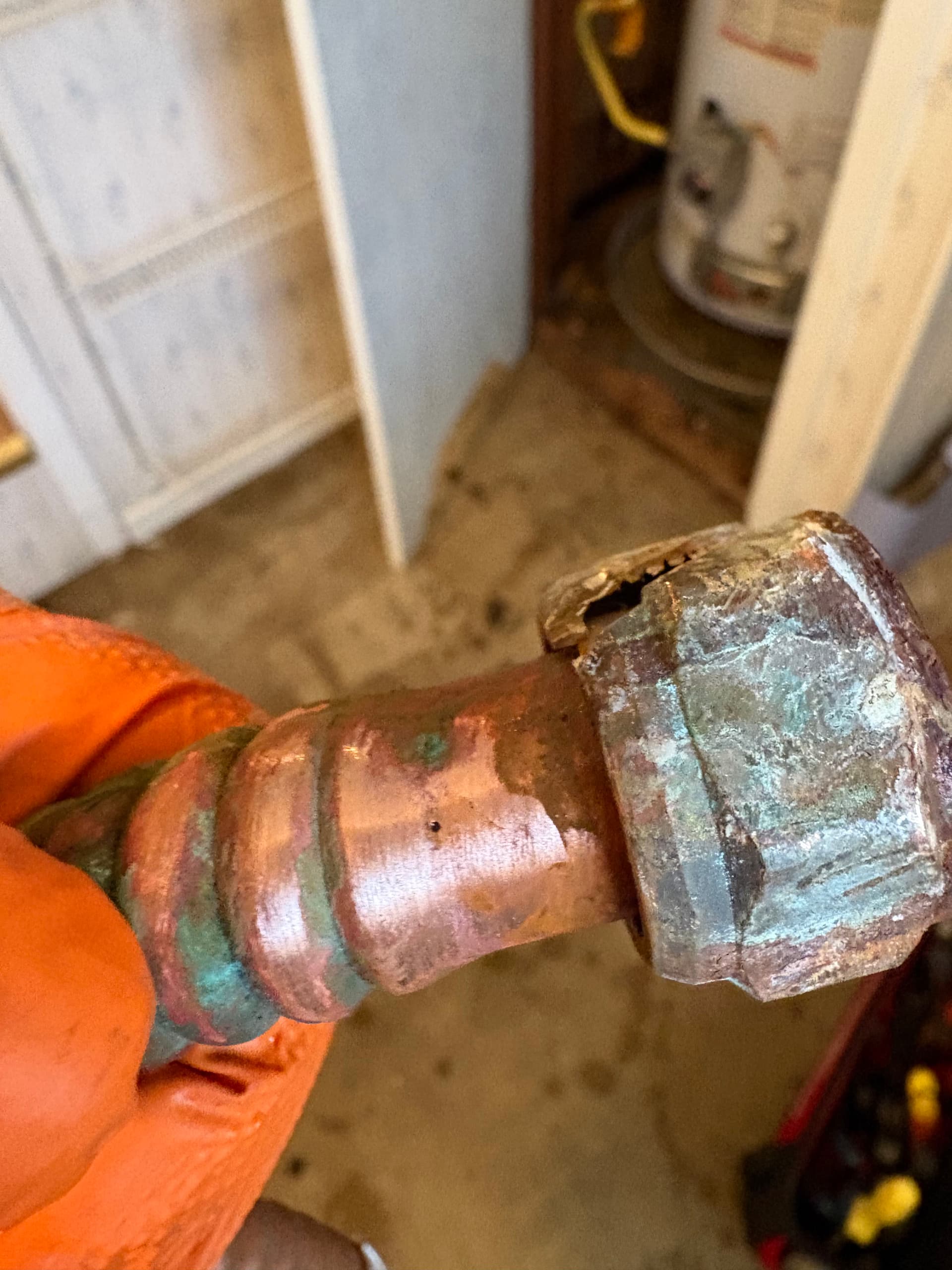
That's exactly the kind of situation we walked into here. The fitting on the supply line had corroded through badly - green oxidation worked all the way into the copper, and the connection had deteriorated to the point where it just couldn't hold anymore. This wasn't a patch job. The damaged section had to come out completely.
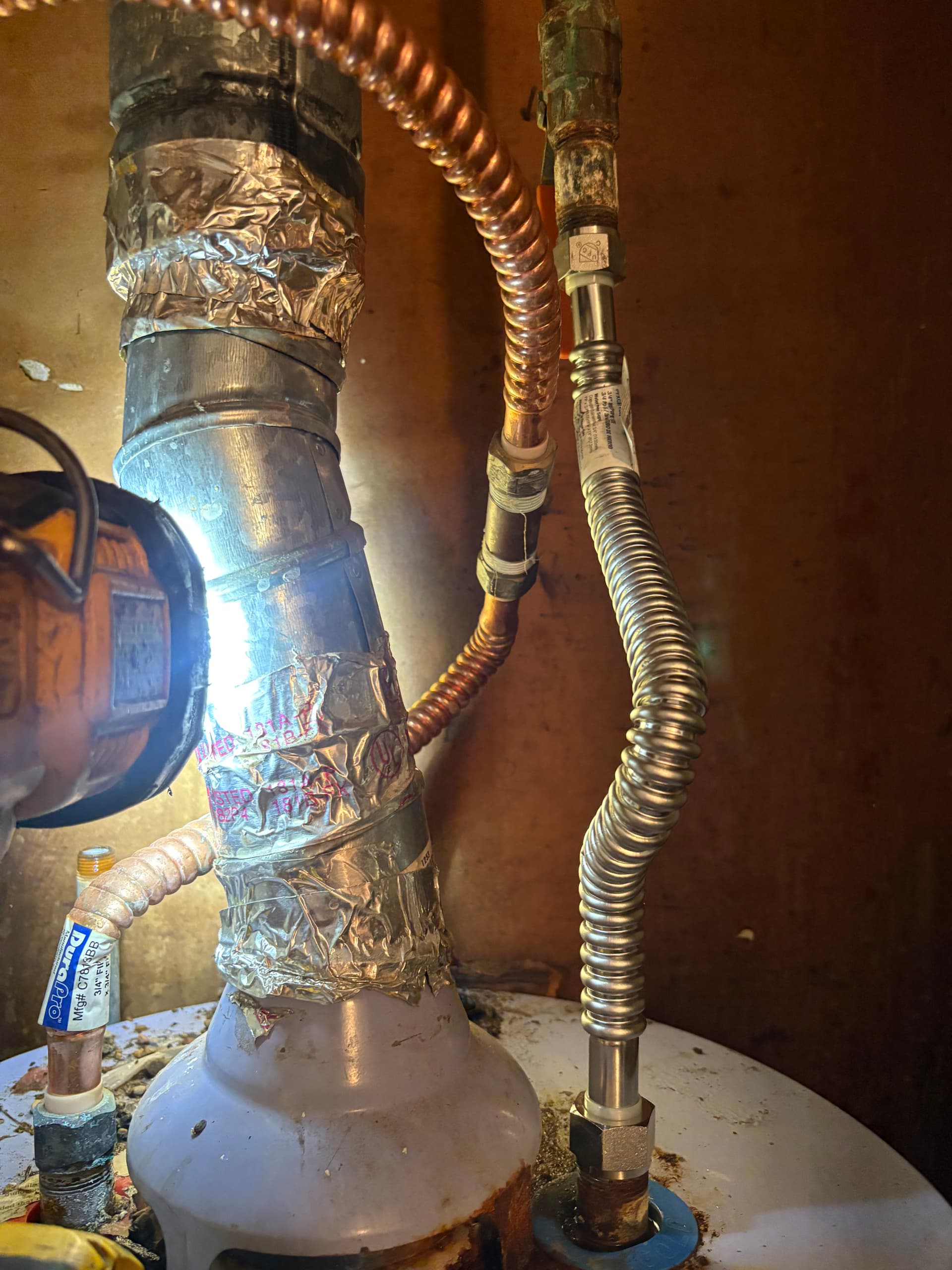
We got the old corroded fitting removed and the supply line replaced with a proper, secure connection. Once everything was tight and tested, water was back on for the customer - no leaks, no drips, no worrying about what's happening behind the scenes every time the water heater kicks on.
This is the kind of repair that's easy to put off. Water heaters are usually tucked away in a closet or utility space, so unless you're actively checking on them, a slow leak can go unnoticed for a long time. By the time most people catch it, the damage is already spreading to the floor, the wall, or worse.
If you've spotted any drips near your water heater, discoloration around the fittings, or rust staining on the tank itself - those are signs worth taking seriously. Catching it early almost always means a simpler fix and a lot less cleanup.